Gerald for WordPress.
An opinionated, high-performance modular monolith built for heavy-duty WooCommerce and FooEvents extensions.
Core Philosophy
Zero dependencies. Absolute focus.
WordPress plugins are notoriously bloated. They install massive database schemas, bundle dozens of fragile third-party libraries, and autoload megabytes of dead code on every page request.
Gerald is different. Architected as a modular monolith, it lives inside a single plugin folder but runs only the code you explicitly toggle on. Inactive modules remain completely idle and ignored by the PHP engine during execution. One lightweight database check on boot, zero external dependencies, and absolute focus.
We built Gerald to solve complex ticketing, couponing, and frontend booking challenges for FooEvents and WooCommerce without slowing down server response times, while ensuring the architecture can easily support additional custom functionality or extend other plugin stacks in the future.
Curious about the name? Gerald is our resident mascot and most dedicated "employee" (see the About page). On our team, Gerald represents the ultimate force multiplier—committed to using the exact right tool for the job and adapting to the problem at hand. This modular monolith is his digital namesake: a flexible, extensible framework that loads only what is needed, adapts to your stack, and scales without adding bloat.
The Switchboard
How Gerald conditionally loads code to keep WordPress fast and responsive under heavy transaction volumes.
Conditional Autoloading. Zero Dead Code.
Standard WordPress plugins autoload all their code, styles, and third-party dependencies on every single page view, even if the visitor is just reading a blog post. This balloons server memory usage and drives up TTFB (Time to First Byte).
Gerald introduces a single-lookup Switchboard. Powered by a lightweight configuration matrix in wp_options, Gerald checks active toggles on boot. Inactive modules remain completely unparsed—their PHP files are never loaded, their styles are never queued, and their database hooks are never registered.
This ensures that heavy business logic (like voucher recovery tools or volume discount calculators) runs only when and where it is explicitly needed, keeping page loads snappy for everyone else.
Module Breakdown
Gerald is designed as an extensible modular monolith. We launched with these core modules, but the framework is built to scale—we can develop and plug in custom capabilities as your business needs evolve.
Product Vouchers
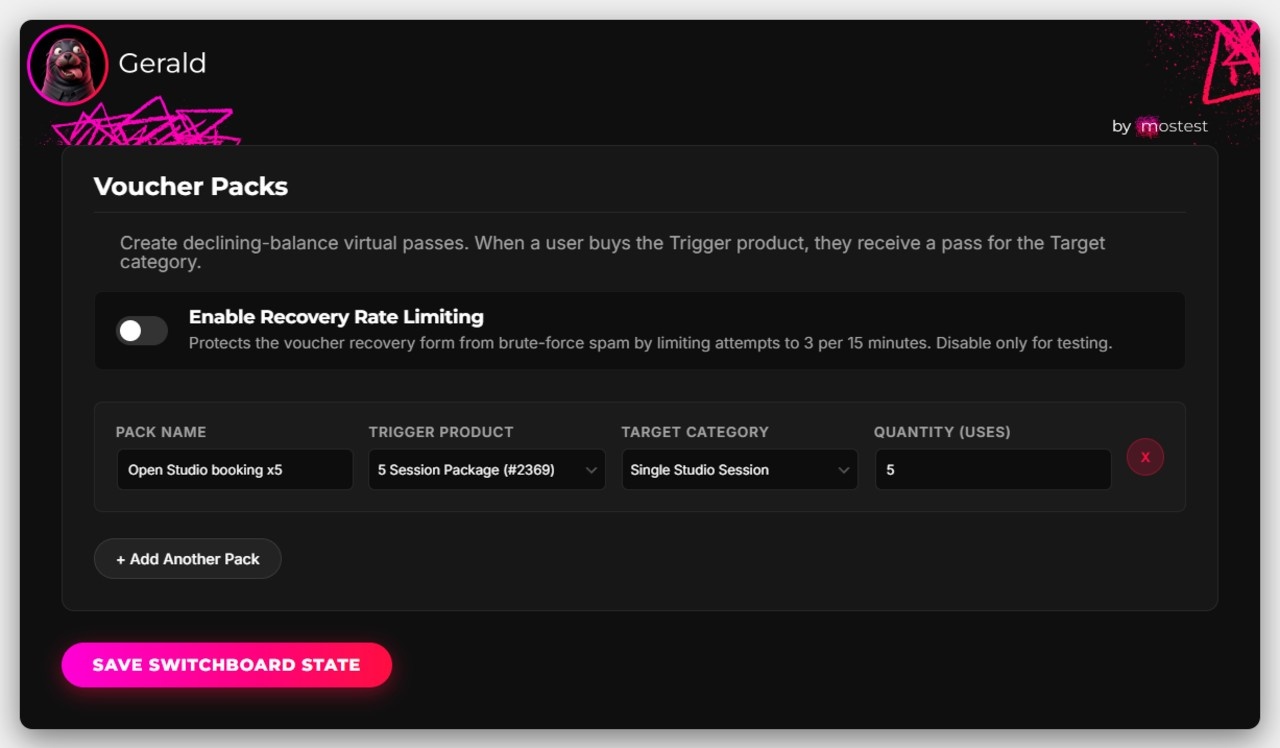
Coupons are notoriously easy to share and abuse. This module creates restricted entitlement vouchers mapped directly to standard WooCommerce Virtual Products.
When a customer buys a qualifying product, Gerald spawns a unique coupon ledger in _flex_balance tracking exact remaining usage limits. A frontend [voucher_recovery] shortcode provides a secure lookup form with transient email checks.
Volumetric Discounts
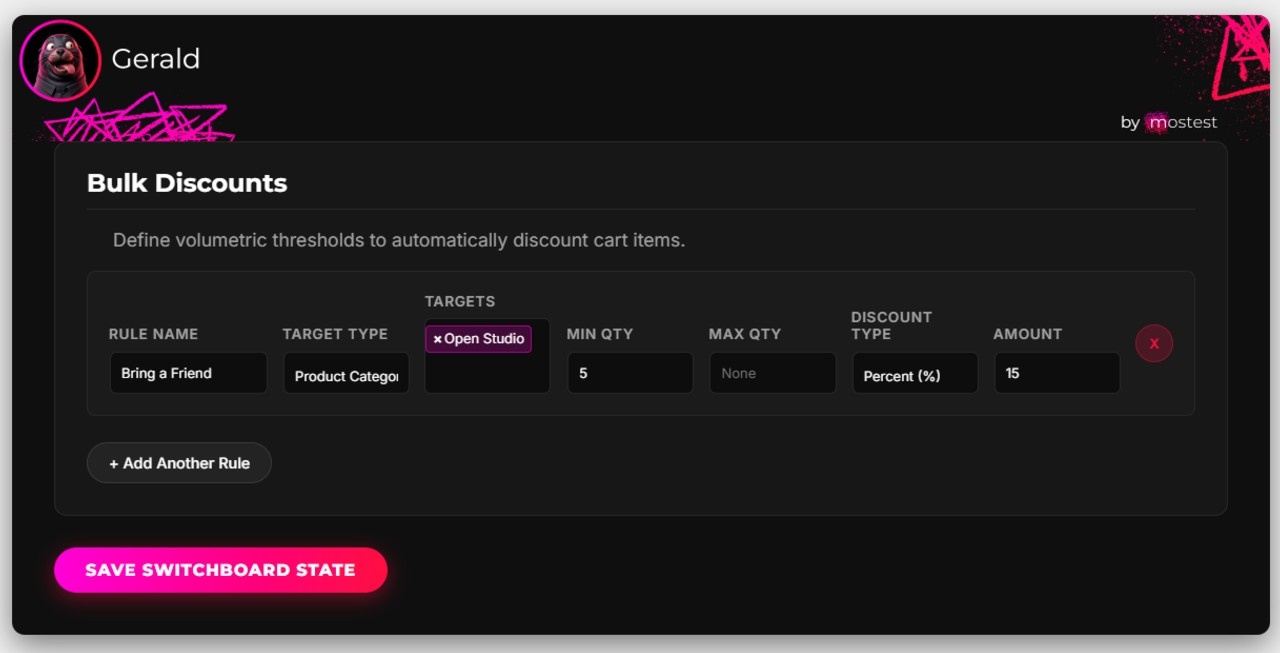
Handles wholesale volume rules without bloating the checkout engine. Discounts are defined in a clean global JSON map stored in wp_options.
By hooking directly into woocommerce_before_calculate_totals, Gerald counts matching products in the cart and overrides unit prices dynamically before checkout. No promo codes required, saving system resources and reducing user friction.
WooCommerce Mods
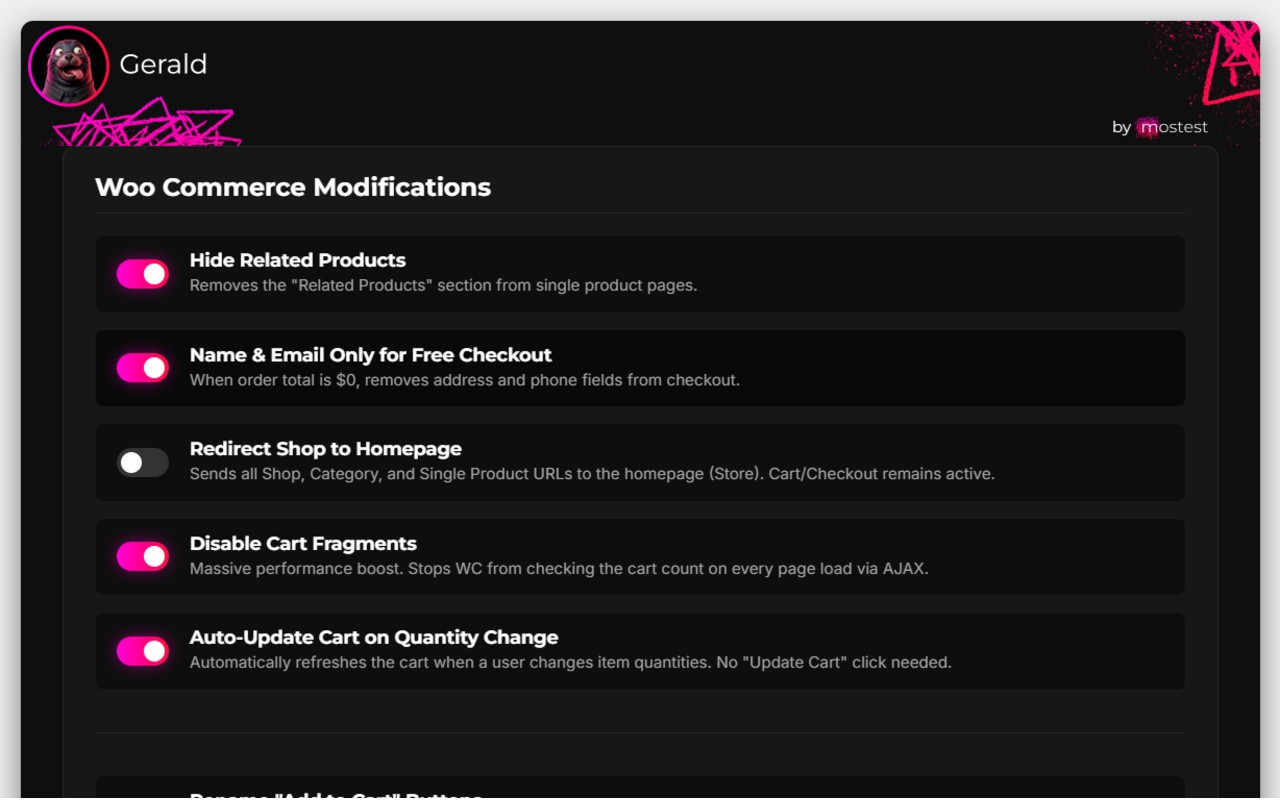
Removes overhead and friction from WooCommerce frontends. It automatically hides redundant related products when they get in the way of ticket checkout flows.
Simplifies checkout screens when cart totals are $0.00, and enables shop URL redirection rules to dynamically send buyers directly to custom checkout funnels.
WordPress Mods
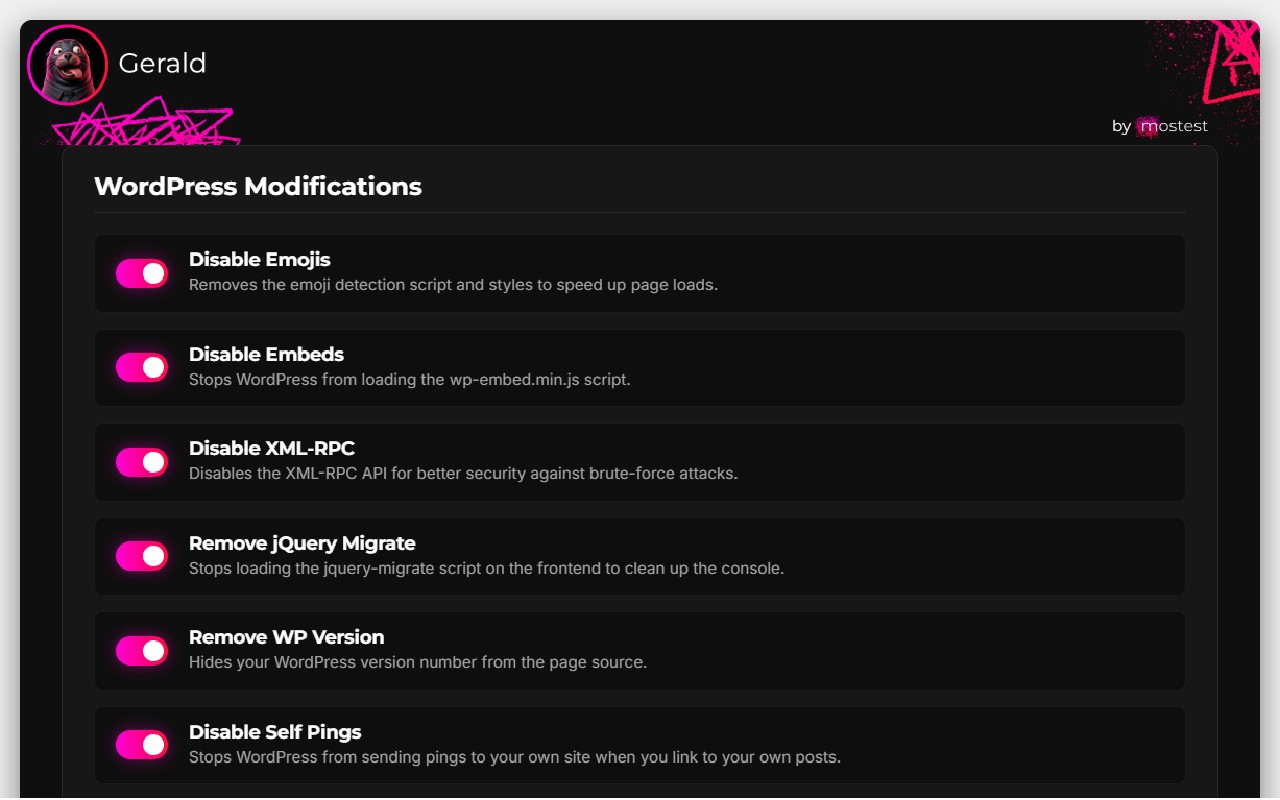
Cleans up background bloat by disabling emojis, embeds, XML-RPC, and jQuery Migrate scripts. It blocks guest REST API queries to prevent user enumeration.
Additionally, it provides options to restrict post revision counts to keep the SQL database small, and can force the Classic Editor for builders relying entirely on page builders.
FooEvents GBUX
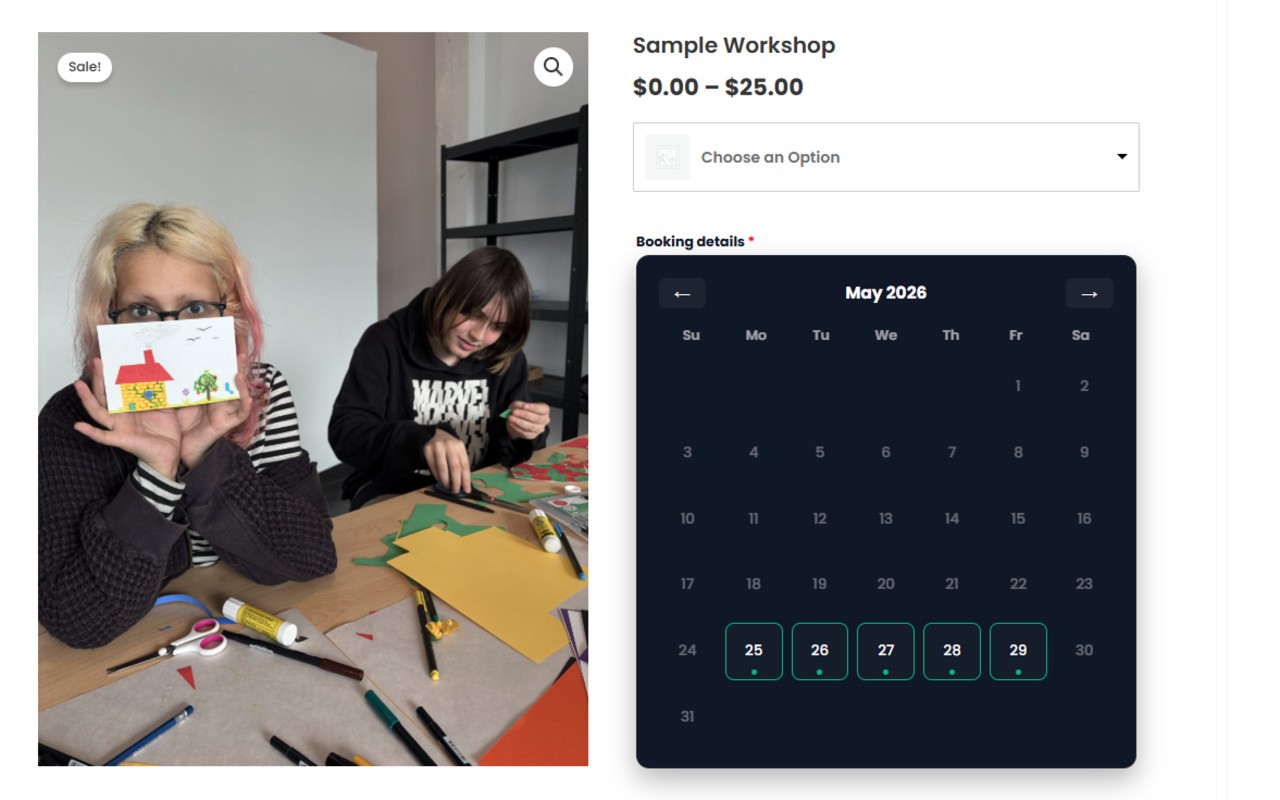
Overrides standard styling hooks in FooEvents Calendar. It injects category-specific CSS classes into event slots, opening up custom template options.
Introduces Gerald Booking UX (GBUX), replacing the default date dropdowns with custom styled calendar cells, outlines linked to active booking statuses, and a distinct capacity warning outline to improve client conversions.
Attendee Checkin Kiosk
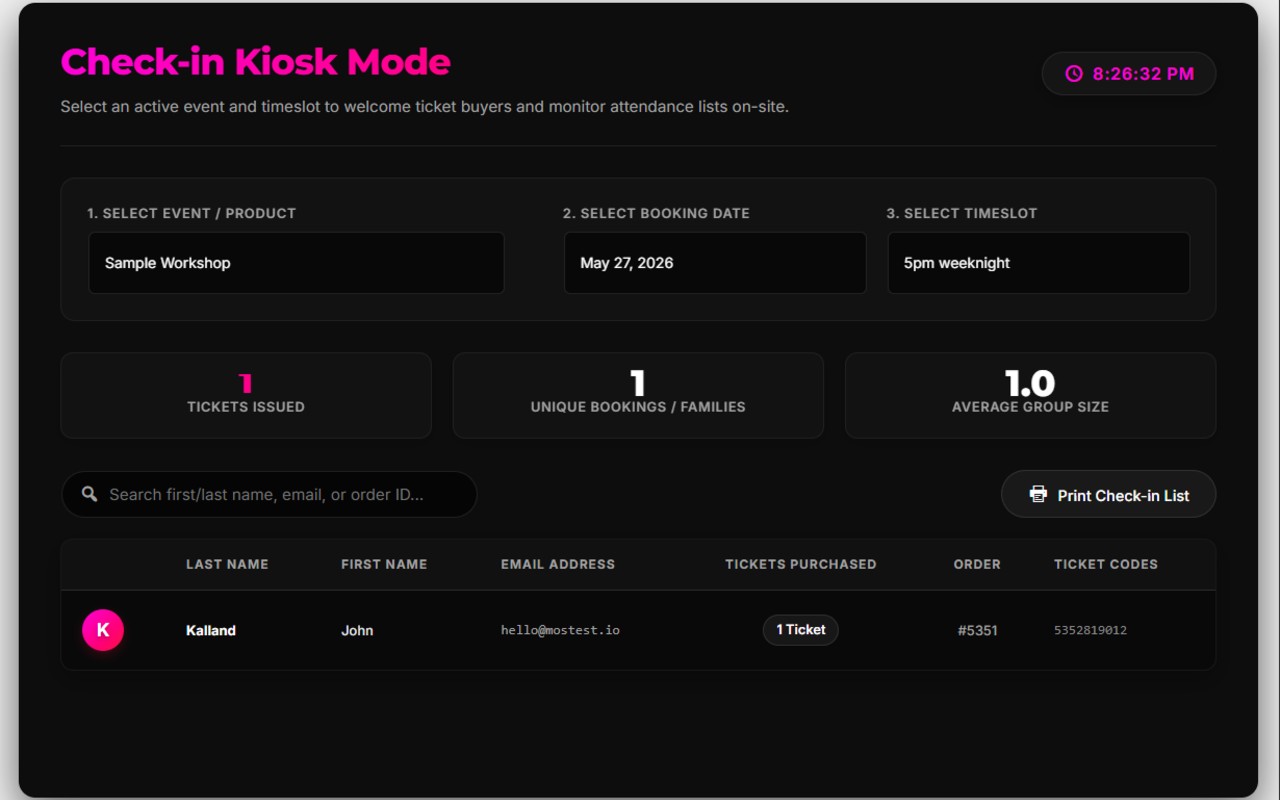
A dedicated, high-performance web dashboard for on-site ticket handlers. It maps FooEvents Custom Post Types, grouping families and bulk orders together.
Features instant search, party check-in logs, real-time ticket analytics, and a print-optimized stylesheet. If the internet drops, the handler can print a high-contrast physical checklist in one click.
Your Custom Module
Gerald is built from the ground up to be an extensible framework. These six modules are just the starting point of what we can automate before things inevitably break.
Tired of fighting WooCommerce limitations or writing hacky functions to bridge third-party API gaps? Describe your business logic nightmares to us and let's build the solution. Contact us to build your custom module →
Designed to Fail Safely
Software in production catches fire. Here is how Gerald mitigates WooCommerce conflicts, double-refunding race conditions, and server autoload bloat.
Hook Priority Races
Dynamic pricing and custom cart calculation hooks are notoriously overwritten by generic plugins.
999, running late in the cycle to guarantee its rules take absolute precedence over greedy third-party plugins.
Refund Race Conditions
WooCommerce partial refunds trigger events that can double-restore ticket and voucher balances if two admins refund simultaneously.
_flex_balance use a strict database transaction lock checking the order history state before adding tickets back.
Orphaned Product Triggers
If an admin deletes a WooCommerce product mapped as a trigger in an active voucher ruleset, it orphans the rule and crashes checkout.
wp_trash_post. It locks deletion and displays a system-level notice forcing the admin to remove the voucher rule first.
Shared IP Transient Block
Throttling voucher recovery lookup forms strictly by IP will block entire offices or crowds behind corporate NATs or public Wi-Fi.
Need custom integration?
Make WordPress fly.
Tired of stitching together five slow, premium plugins to solve one business problem? Let's build a dedicated, modular monolith that works.